
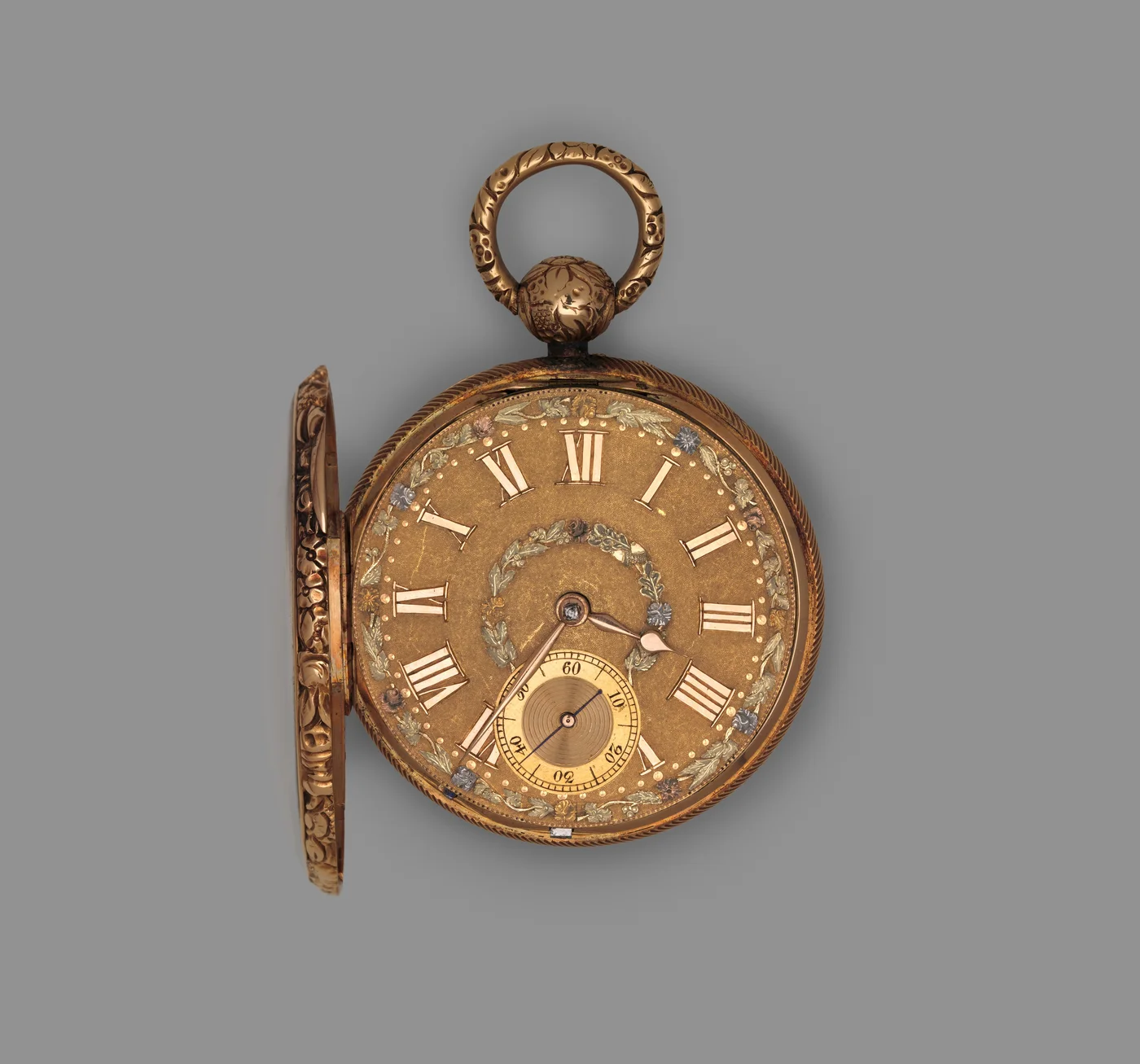
Why does this relic of an earlier age still draw us in?
Something rather strange has happened to watches. They once served one of our most important practical needs: telling the time. Today, we barely need a separate watch for that. The time is on our phones, computers, car dashboards and microwave displays. And almost any of these devices tells it more accurately than a mechanical watch.
Yet watches haven't disappeared.
In fact, it was precisely as our need for them began to fade that our relationship with them became especially clear.
People still buy watches, collect them and discuss their movements, case shapes, hands and dials. They still wear a fairly complex mechanical object on their wrist to solve a problem that has already been solved.
I'm a designer, and I'm working on watches myself. So the question is personal: what am I actually creating if the problem of telling the time has already been solved? And why am I still drawn to a little mechanism on my wrist?
I've tried to follow that attraction, and I'd like to share a few thoughts. I'm not a watch blogger, so I won't dwell on popular explanations such as watches being status symbols. Or the even stranger explanation that they are tools. On watch YouTube, I often hear things like, “But it's a diving instrument.” Yet I doubt most Blancpain Fifty Fathoms owners buy one to go diving.
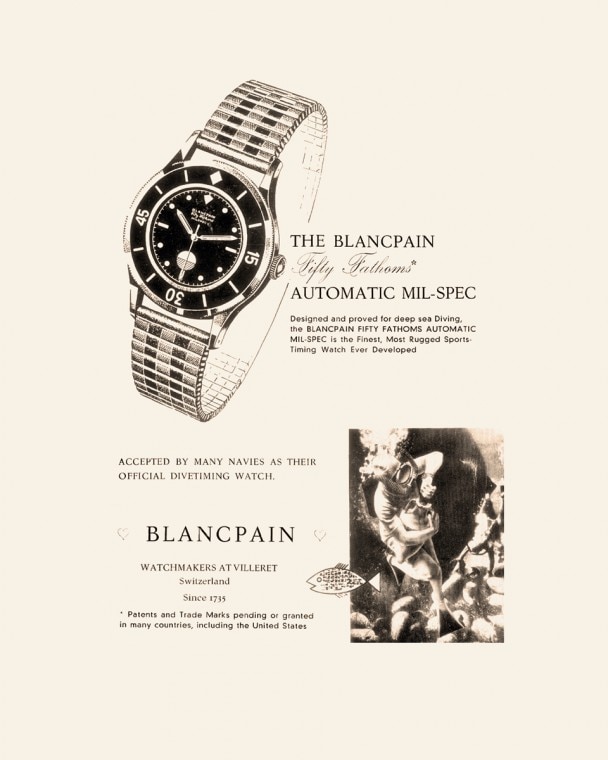
Watches for people
who really did dive.
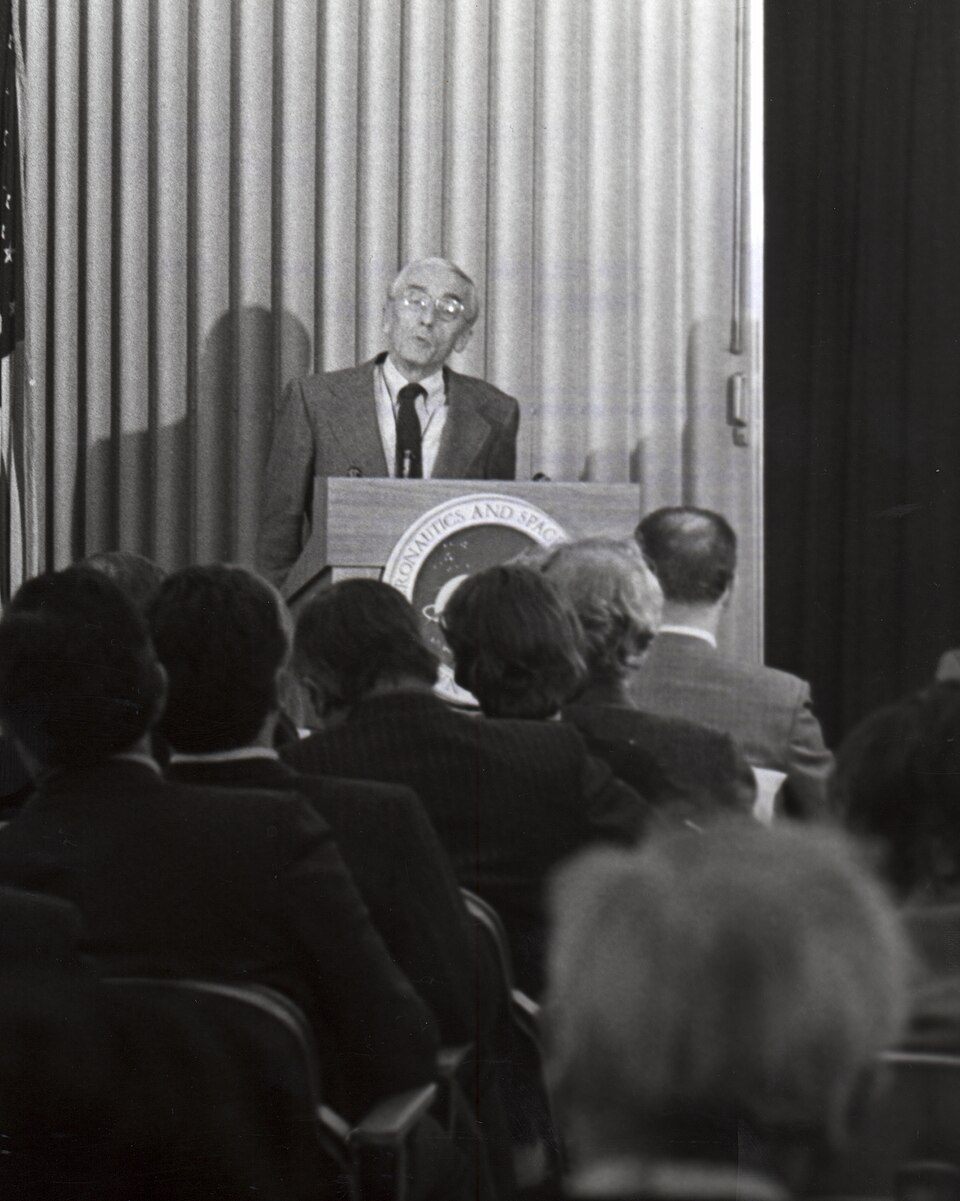
Jacques-Yves Cousteau's team chose the Fifty Fathoms for filming The Silent World.

And very few of us regularly venture into open space and therefore actually need a Barrelhand watch, with materials certified for use there. There is no printing on the dial, for instance, because paint doesn't behave very well in a vacuum. But again, how often do we find ourselves in a vacuum? Probably almost never.

Beyond the
Kármán line.
In 2025, a Barrelhand Monolith prototype was flight-tested in space.
Its function as a tool clearly doesn't explain everything.
Watch obsessives and collectors will understand, I think: there is something in this object beyond telling the time and beyond status.
Something we feel quite clearly but struggle to explain.
For me, as a designer, that is the most interesting part. Let me approach it from another angle.
Archetype
We all have a rough idea of what an archetype is.
At least, we're familiar with the word. There are recurring character types, figures and stories. Psychologists talk about archetypes. Marketers talk about brand archetypes.
- Hero.
- Ruler.
- Sage.
- Rebel.
We recognise an archetype even when its particular expression changes each time. The Joker, Loki and Odysseus have something in common: they are tricksters. When we talk about the magician archetype, alongside figures from The Lord of the Rings and Harry Potter, the Apple logo comes to mind.
But archetypes needn't be limited to brands, characters or stories.
There also seem to be remarkably persistent ways of organising space.
Let's look at an ordinary watch.
And try removing everything that isn't essential.
- Remove the brand.
- Remove all the text.
- Remove the numerals.
We could even remove the hour markers.
What is left?
What remains
when you remove it all?
Move from a familiar dial to its underlying geometry.
A familiar object: lettering, numerals, markers, hands.
What remains is something basic: a circle. Even a square watch is essentially circular. Even the Cartier Crash is archetypally round. There is also a centre, which coincides with the axis around which the hands turn. There are directions from the centre to the edge. A boundary. And hands that divide the space within it into parts. We can strip a watch down a long way and still recognise this structure.
And it appears far beyond the watch dial.
- The plans of some settlements and temples have a centre, a periphery and principal directions.
- Calendars divide a whole into parts.
- Mandalas organise space around a centre.
Of course, these are not literally the same diagram. But similar spatial relationships appear in very different things.
As though space had archetypes of its own.
Some kind of primordial forms.
After all, we cannot name the person who invented the centre. Or the axis. Or the circle.
Why, when we need to represent the order of something vast and invisible — time, the year, the world — do we return to these forms?
The simplest answer is that this is how human beings are made.
Our bodies are similar. Our perception of space is similar. We live on Earth and observe day and night, the movement of the Sun, seasons and cycles.
Perhaps that explanation is enough.
But what if there is a much more radical answer?
What if it isn't only about how human beings are made?
What if these forms recur because each time we discover the same order?
Rather than inventing it anew.
We somehow reproduce it.
This is roughly where we enter the territory of the Traditionalists. And perhaps the best-known Traditionalist: René Guénon.
Form as a trace
of a shared order.
Here the essay moves from a resemblance between forms to a hypothesis about principles that different traditions express in their own ways.
And his idea of the Primordial Tradition.
For Guénon, these recurring forms and symbols are not simply the result of different people happening to invent similar things.
A more fundamental order lies behind them.
Different traditions, cultures and symbolic systems may be particular reflections of that order.
And this search, this return to something primordial that humanity has lost, becomes a desire for a deeper search for what has been lost: for fragments, for patterns — for any clue at all.
- In the knowledge of ancient civilisations.
- In sacred texts and ancient hymns.
- In architecture.
- In language.
- In ritual.
Perhaps that is why certain forms make such a particular impression on us.
As though we don't simply see them.
As though we recognise them, or remember them.
Viewed this way, a watch dial might contain a very distant echo of these structures.
An echo of something much larger than the task of finding out what time it is.
Let's pause on this idea and turn to something more scientific.
I've moved rather quickly from wristwatches almost all the way to the Primordial Tradition.
You might expect Freemasons, secret societies, cosmism, Shambhala and all the rest to follow.
No.
We don't need to go there just yet.
Because there is a fairly neutral and very useful word for the kind of form I'm talking about.
Cosmogram.
A cosmogram isn't necessarily a picture of outer space.
Not stars. Not planets. Not galaxies. Certainly not esotericism.
Here, it is more useful to understand cosmos as the order of the world.
A cosmogram, then, is an object that somehow condenses a model of the world, or a particular idea of how the world works.
And the concept exists quite comfortably outside esotericism.
For example, John Tresch, a historian of science and professor at the Warburg Institute, examines it in detail.
For Tresch, many different things can potentially be cosmograms.
- A building.
- A painting.
- A text.
- A book.
- A song.
But not just any of them, of course.
To be a cosmogram, a thing must somehow contain an idea of the world, bringing its different elements together into a single structure.
Tresch discusses, for instance, the Tabernacle in the Book of Exodus.
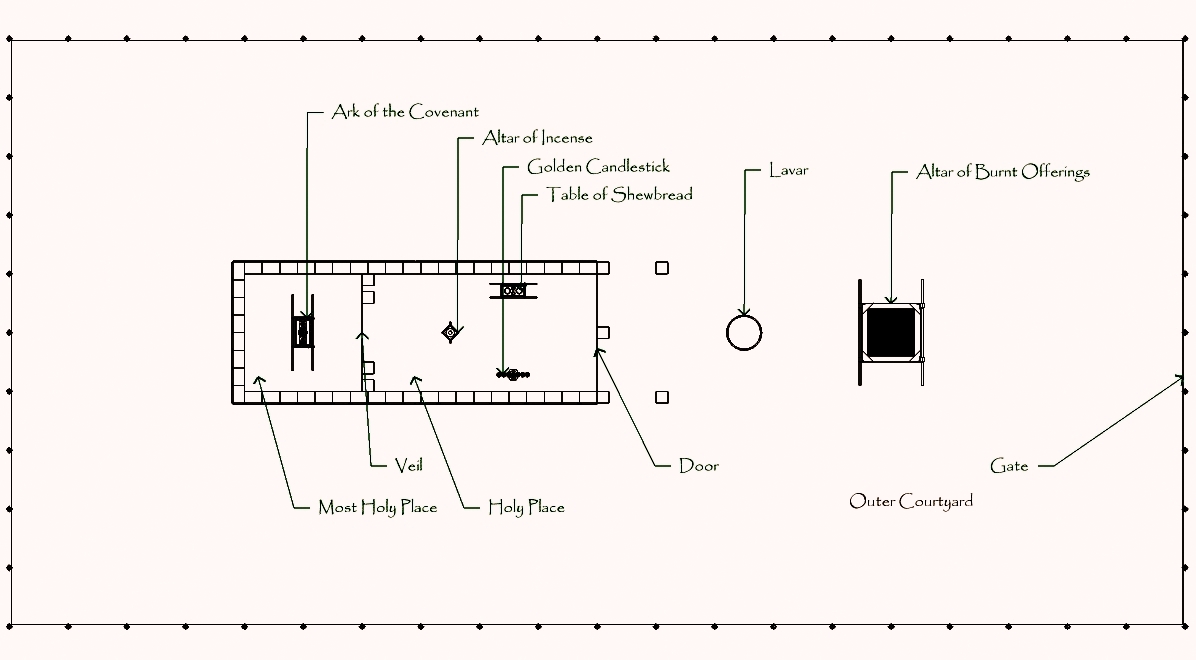
Click the plan to open it at full size.
- Outer Courtyard
- Outer courtyard
- Holy Place
- Holy Place
- Most Holy Place
- Holy of Holies
- Ark of the Covenant
- Ark of the Covenant
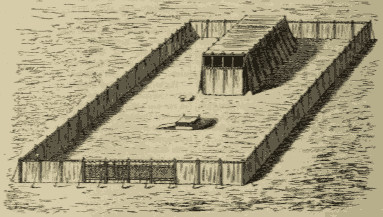
Historical reconstruction after Riehm. Handwörterbuch des biblischen Altertums, 2nd ed., 1894, vol. II, p. 1586; reproduced in Dictionnaire de la Bible. Source ↗ · Public Domain.


The plan and historical view illustrate the example of the Tabernacle in John Tresch's “Cosmogram”. These are separate illustrative sources; the online publications by Tresch that were checked do not include a plan of the Tabernacle.
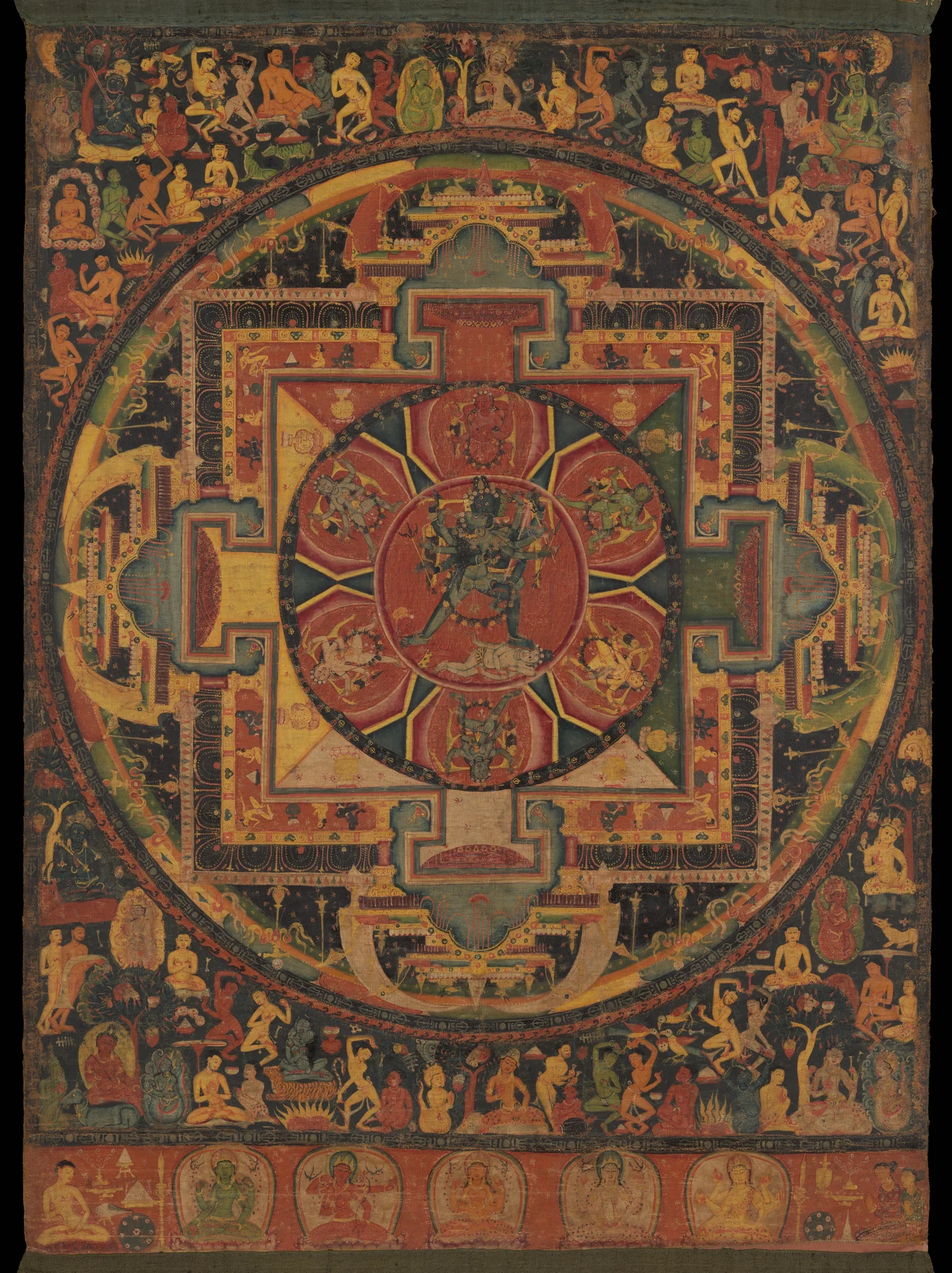
A whole,
brought together
around a centre.
Alongside is a schematic illustration of the spatial relationships discussed in the essay.
Let's look at it beyond its role in Judaism, as a building or as an object of worship.
Its arrangement — the arrangement of the Tabernacle — itself expresses a particular model of relationships.
Here we find the same structural language.
- What is at the centre.
- What is at the periphery.
- Where one may enter.
- Where one may not.
- How space is divided.
- How movement and life are organised within that space.
An idea of the world becomes a space.
Now let's return to watches.
Because something surprisingly similar has happened with them.
The world on your wrist
An ordinary dial shows us hours and minutes.
But we begin adding more and more layers. In a sense, these are also scales of time.
- A calendar.
- Moon phases.
- Another time zone.
- Astronomical cycles.
At some point, we find ourselves looking at a small object in which someone has tried to bring together the Earth's rotation, the Moon's movement, the calendar and their own schedule.
And there is something mesmerising about looking at that tiny dial — not just looking, but realising that you are observing relationships between things that are, in reality, incomparably larger than us.
In a sense, this is a cosmogram. But a watch doesn't need a grand complication to be one.
- A perpetual calendar, for instance.
- Moonphase.
- World timer.
Strip away all these complications and a simple watch still retains this interesting quality: it shows time through cycles nested within one another.
- The second hand completes a turn; the minute hand moves forward one marker.
- The minute hand completes a circle; the hour hand moves to the next hour.
The same space lets us see different scales of time and the relationships between them.
Each hand
has its own pace.
in a minute
in an hour
per turn of the hour hand
The speed ratios are preserved. The hour hand completes a circle in 12 hours, or two circles in a day.
So, for me, the resemblance to those earlier images is more than visual. A dial also helps us picture how time is structured: how a short interval relates to a long one, a part to a whole.
I'm not suggesting that watchmakers once found an ancient cosmogram and decided to turn it into a watch.
My point is that a familiar object can offer a way of representing the world's order. Even if we rarely think about it when we glance at our wrist.
Our place in this order
But there is another quality of mechanical watches that draws me in.
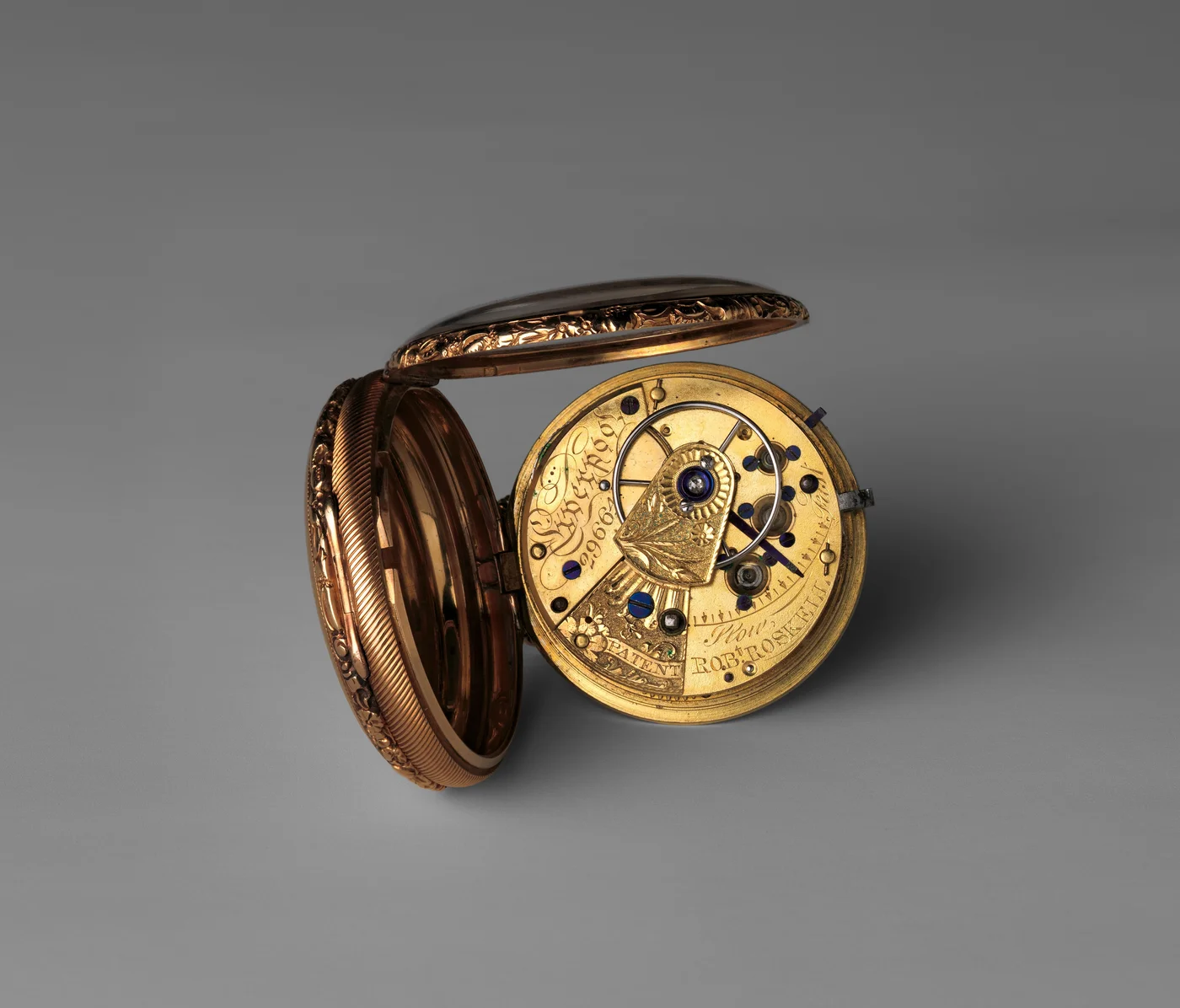
All this order we've been discussing is sustained by the physical work of a small mechanism. And its operation depends on us.
When I wind a watch, I quite literally pass some of my energy to it.
That energy is stored in the spring and then transformed into movement over the following hours.
With a self-winding watch, the connection is even more direct: I move, and the movement of my body helps keep it running.
- 01Your handTurns the crown
- 02The springStores energy
- 03The movementTransmits and regulates motion
- 04The handsShow the time
In this sense, a watch can be called a working cosmogram. Its owner takes part in its operation.
And we can call this a ritual: the act of winding a watch. Not a religious ritual, but a ritual in a broader sense. A personal one, perhaps: a familiar sequence that acquires meaning beyond its practical use.
It is quite clear that watches are about more than practical use: to find out the time, all I need is a glance at my phone.
Why watches will probably stay
I can't claim that mechanical watches as we know them will remain forever.
But I think the need they answer will outlive many more technologies.
The need to make time visible. To give it a form we can take in at a glance. And to keep an object close through which we develop a personal relationship with time.
For some, status matters most in a watch. For others, engineering, beauty or the memory of the person who gave it to them.
When I tried to understand my own attraction, this is where I arrived: I find it inspiring and absorbing to wear a small, working model of order on my wrist. To look at it and take part in its operation.
I don't know how far that explains other people's love of watches. But it helps me understand my own interest and what I want to create as a designer.
And here I return to the paradox I began with.
The less I need a watch to tell the time, the clearer it becomes why I wear one.
I can find out the time anywhere.
But this watch is something I want to wear.